The weight card
Semaglutide weight loss over time
The size of a change and the time it lasts are separate reasons to pay attention. I want both on the table.
The STEP 1 result
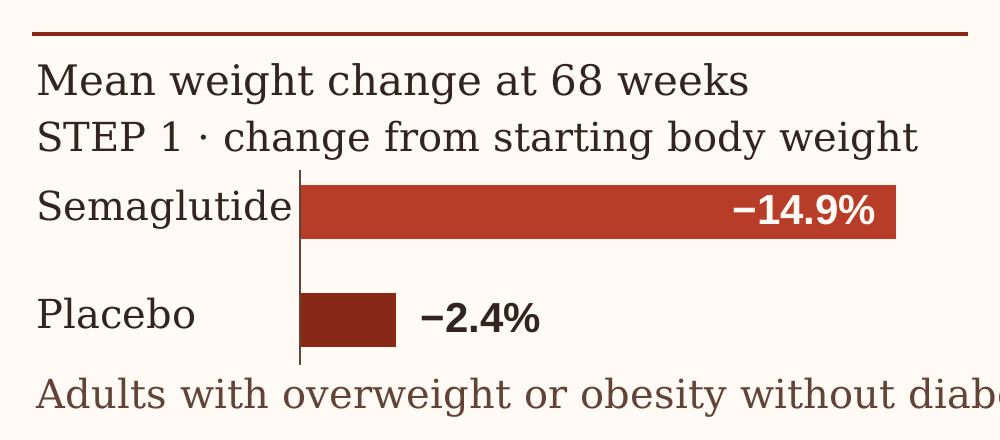
STEP 1 enrolled adults with overweight or obesity without diabetes. In this randomized trial, the mean body-weight change at 68 weeks was −14.9% with semaglutide and −2.4% with placebo. The semaglutide group received a study dose of 2.4 mg.
That comparison is the useful starting point. Both figures describe a change from baseline, the starting body weight. They describe group averages, so treating either as a personal destination adds a certainty the finding cannot supply. I’d give the comparison a prominent card and leave room around it for the rest of the story.
The diagram puts the reported endpoints on the same scale. I trust this spare comparison more than a smooth curve that fills the intervening weeks with guesses.
104 weeks in STEP 5
STEP 5 examined a longer stretch of treatment. In adults with overweight or obesity, semaglutide produced sustained, clinically meaningful weight loss over 104 weeks, significantly greater than placebo.
I like the patience of that question. A large change makes a good headline; a change still present much later has a different practical meaning. The longer trial earns attention even without borrowing a dramatic percentage from the earlier study.
These are separate trials. Lining their findings up helps frame the question of duration, while joining them into one continuous curve would create a trajectory that neither study reported. That temptation seems particularly strong when a result is turned into a story about a person’s future. I’ll take the less tidy account: a substantial result in STEP 1, followed by evidence of sustained benefit in STEP 5.
Following the calendar
The longer STEP 5 result concerns treatment with semaglutide. The conditions surrounding a durable change deserve as much curiosity as the change itself, especially when I try to picture ordinary life around it. That curiosity is a reason to ask for more information, rather than to invent a successful maintenance routine.
I object to progress reports that turn every change on a scale into a verdict on someone’s effort. The research question here is about treatment and outcomes. A moral score adds nothing useful to it. Equally, an encouraging long-term result cannot tell an individual how treatment will feel or which outcome will matter most to them.
That is where this card hands the conversation on. The side-effects card concerns tolerability, and the health-outcomes card follows results that a scale cannot record. I’d rather have those pages open together than let the weight figure make every decision in the room.