The appetite card
Appetite, preference and reward
An appetite explanation that ends at willpower leaves me unsatisfied. The experiments are more interesting than that.
Brain pathways and food preference
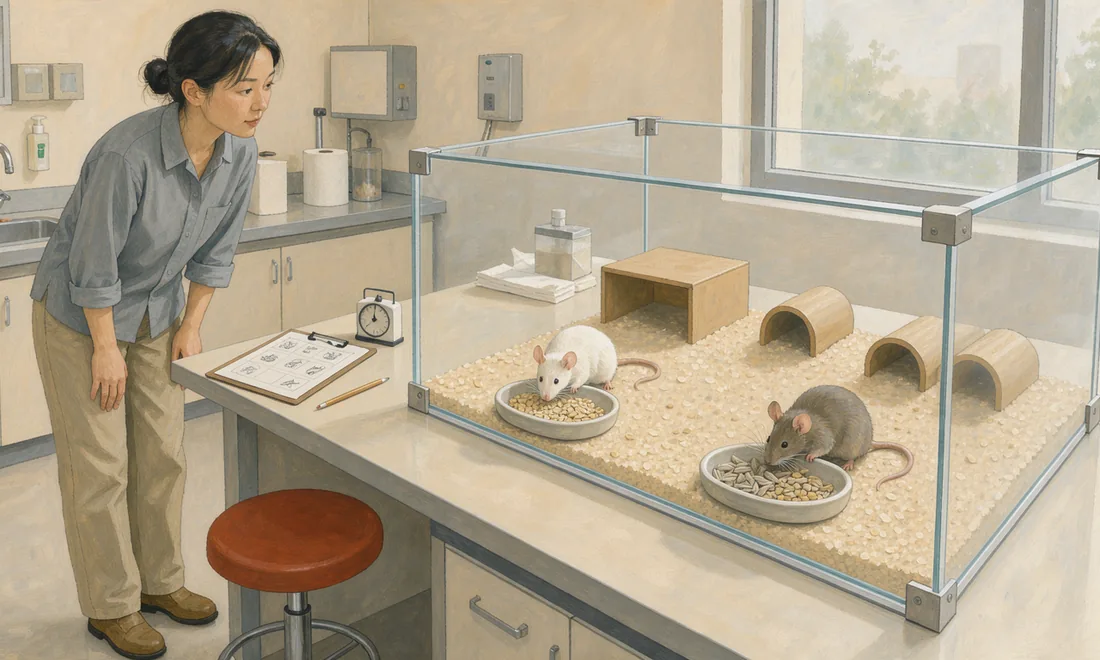
The rodent experiments give this subject some texture. Semaglutide reduced food intake and altered food preference in mice and rats without decreasing energy expenditure. The work traced its effects through distributed central nervous system pathways, including the brainstem and hypothalamus.
I’m especially taken with the change in food preference. The experiment concerned both how much the animals ate and the foods they preferred. That widens the question beyond simply persuading an animal to consume less. The finding also concerns animals throughout; a description of a human day needs human observations of its own.
A mechanistic review of semaglutide describes it as a GLP-1 analogue, a molecule modelled on glucagon-like peptide-1, and emphasizes the preclinical origin of much of the detailed mechanism work. I welcome that explicit provenance. A detailed account of a brain pathway can sound remarkably finished even while its implications for everyday experience remain open.
A small alcohol-use trial
A human study asks a related, distinct question. In a phase-2 randomized trial involving 48 adults with alcohol use disorder, low-dose semaglutide reduced alcohol consumed in a laboratory self-administration task. The study also reported greater reductions in heavy drinking over 9 weeks compared with placebo.
This extension into reward and consumption gives me a new question to follow. It is a concrete early finding, with a defined population, a laboratory task and a short period of follow-up. Those features give the result its shape. They also make a sweeping claim about lasting recovery much too large for this experiment.
The question I’m eager to see followed up is whether an early change in consumption persists and what it means in the lives of people with alcohol use disorder. That is a research question, and this page offers no treatment instructions for it.
Daily experience
A life-coach title could easily invite a pep talk here. I’d trade the pep talk for a precise account of the problem under discussion. The animal food-preference finding and the human alcohol-consumption trial suggest worthwhile questions about appetite and reward, each on its own terms.
Neither supplies a script for how a particular person will feel at dinner. I resist that jump because it turns a striking experiment into an expectation someone may feel obliged to meet. Curiosity works better with a little breathing space.
The same breathing space matters for discomfort. The tolerability card follows the safety literature, while weight over time returns to the larger weight-management trials. These subjects touch each other without collapsing into a single story about motivation.